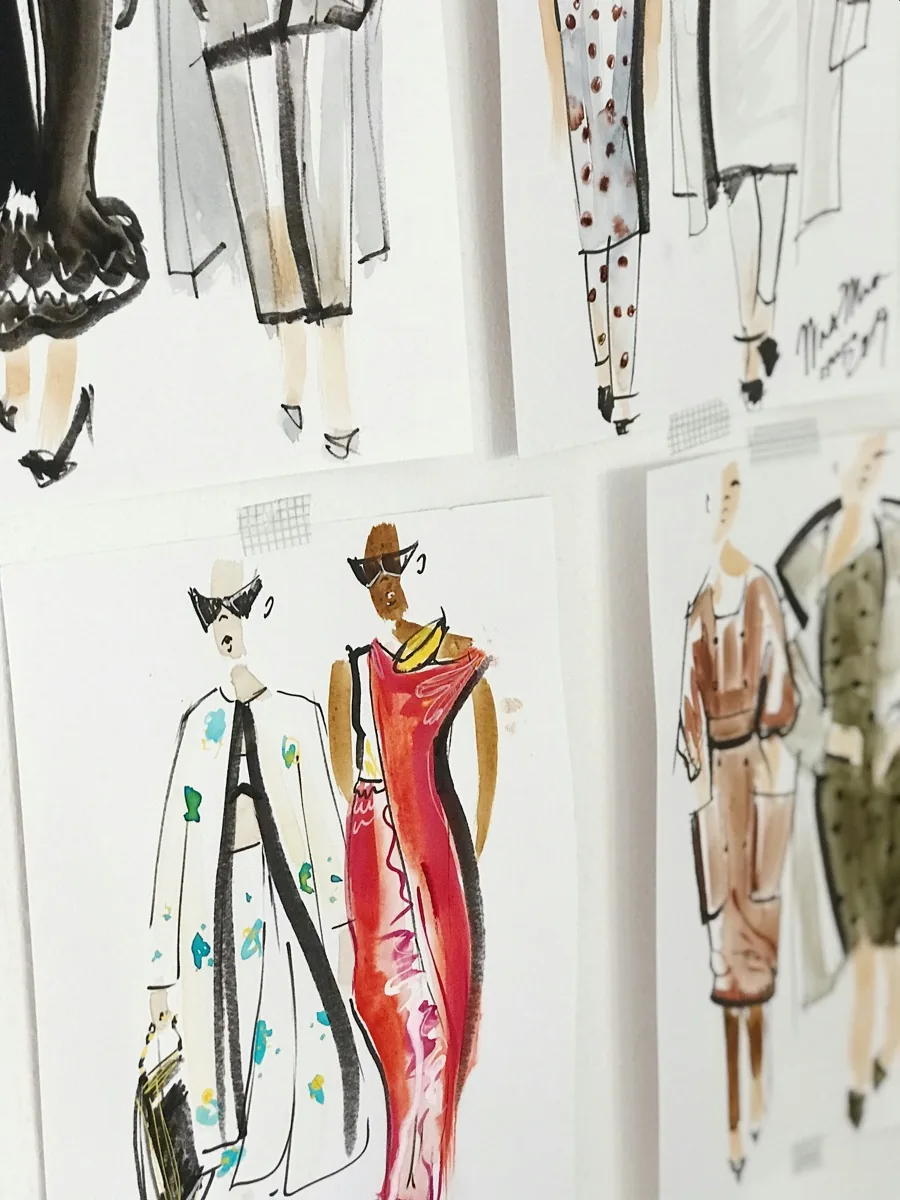
اختيار أقمشة فساتين السهرة ليس مسألة ذوق فقط، بل قرار هندسي يحدّد سقوط الفستان وثباته وكلفته. في بيانات الطلب الحقيقية، يتصدّر الساتان الأقمشة بفارق كبير، يليه الدانتيل والكريب والترتر والشيفون. وكل قماش من أقمشة السهرة هذه يتصرّف مختلفاً تماماً تحت الإبرة: ما ينجح مع الكريب يفشل مع الشيفون، وما يثبت بالساتان ينهار بالدانتيل. لذلك لا يكفي كتابة اسم القماش في الطلب، بل يجب توثيق وزنه وتركيبه وبطانته في التيك باك.
في هذا الدليل نقارن أكثر أقمشة فساتين السهرة طلباً، ونشرح كيف يُوثَّق كل قماش في التيك باك الصناعي ليطابق المصنع ما تخيّله المصمم تماماً.
مقارنة أقمشة السهرة الأعلى طلباً
- الساتان (الأعلى طلباً): لامع وفاخر، سقوط انسيابي، لكنه ينزلق تحت الإبرة ويُظهر كل خطأ — يحتاج توثيق وزن واتجاه نسيج وبطانة دقيقة.
- الكريب: سطح مطفي ووزن أثقل، سقوط منظّم وأقل إظهاراً للعيوب، خيار عملي للقصّات المنظّمة.
- الدانتيل: تفصيلي وزخرفي، يحتاج بطانة دائماً وتوثيق نوع النقشة واتجاهها وطريقة وصل القطع.
- الترتر: لمعان عالٍ للمناسبات الكبرى، ثقيل ويحتاج قاعدة قماش وبطانة، وتوثيق كثافة الترتر واتجاهه.
- الشيفون: خفيف وشفّاف وطبقي، جميل في الطبقات لكنه الأصعب في القص والثبات — يحتاج بطانة وتعليمات قص دقيقة.
لماذا يجب توثيق وزن القماش وتركيبه في التيك باك؟
«ساتان» وحدها كلمة فضفاضة: هناك ساتان حريري خفيف وساتان بوليستر ثقيل، وكل منهما يعطي سقوطاً مختلفاً تماماً. الوزن (جم/م²) والتركيب (نوع الألياف) هما ما يحدّد سلوك القماش فعلاً. حين تكتب «ساتان» فقط، يختار المصنع ما لديه، فتأتي العينة بسقوط مختلف عمّا تخيّلت. التيك باك الدقيق يوثّق هذه التفاصيل فيغلق باب الاجتهاد.
هنا يدخل دور نيسكا. عند توليد التيك باك الصناعي، يُوثَّق نوع القماش ووزنه وحاجته للبطانة ضمن الملف الجاهز للمصنع — فلا يبقى «الساتان» كلمة غامضة. ترفع رسمتك، وتحصل على مواصفات قماش يفهمها المصنع. ابدأ مجاناً.
القاعدة العملية لاختيار قماش السهرة
- ابدأ من سقوط القصّة: القصّة الملتصقة تحتاج قماشاً بمرونة، والمنفوشة تحتاج قماشاً يحمل الحجم.
- احسب البطانة كجزء من القماش: الدانتيل والشيفون والترتر لا تكتمل بلا بطانة، وهي تكلفة وقرار تصميمي.
- اطلب عينة قماش قبل الإنتاج: المست الفعلي يكشف ما لا تكشفه الصورة.
لرؤية كيف يجتمع القماش مع القصّة في قطعة كاملة، راجع دليل تيك باك فستان السهرة بالساتان.
دور نيسكا
القماش الصحيح بتوثيق خاطئ يعطي نتيجة خاطئة. نيسكا تحوّل رسمتك إلى تيك باك صناعي يوثّق نوع القماش ووزنه وبطانته ضمن الملف الجاهز للمصنع، ثم يربطك بالمصانع داخل المنصّة — فيخرج الساتان كما تخيّلته، لا كما تصادف أن يكون لدى المصنع. ابدأ مجاناً.
Choosing evening dress fabrics isn't just a matter of taste — it's an engineering decision that sets drape, stability, and cost. In real demand data, satin leads the fabrics by a wide margin, followed by lace, crepe, sequins, and chiffon. Each evening fabric behaves completely differently under the needle: what works with crepe fails with chiffon, and what stays put in satin collapses in lace. So writing the fabric name isn't enough — its weight, composition, and lining must be documented in the tech-pack.
This guide compares the most-requested evening dress fabrics and explains how each is documented in the industrial tech-pack so the factory matches exactly what the designer imagined.
Comparing the most-requested evening fabrics
- Satin (most requested): lustrous and luxurious with fluid drape, but it slips under the needle and shows every error — needs documented weight, grain, and precise lining.
- Crepe: matte surface, heavier weight, structured drape that hides flaws — a practical choice for structured cuts.
- Lace: detailed and decorative, always needs lining plus documentation of motif type, direction, and panel joins.
- Sequins: high shine for major events, heavy, needs a base fabric and lining, plus documented sequin density and direction.
- Chiffon: light, sheer, layered — beautiful in layers but the hardest to cut and stabilize, needs lining and precise cutting instructions.
Why fabric weight and composition must be documented
"Satin" alone is a loose word: there's light silk satin and heavy poly satin, each giving a totally different drape. Weight (gsm) and composition (fiber type) are what truly define fabric behavior. Write only "satin" and the factory picks what it has, so the sample drapes differently from what you imagined. A precise tech-pack documents these details and shuts the door on guesswork.
This is where NEXA comes in. When the industrial tech-pack is generated, fabric type, weight, and lining needs are documented inside the factory-ready file — so "satin" is no longer a vague word. Upload your sketch, get fabric specs the factory understands. Start free.
The practical rule for choosing evening fabric
- Start from the cut's drape: a body-hugging cut needs stretch; a voluminous one needs fabric that holds shape.
- Count lining as part of the fabric: lace, chiffon, and sequins aren't complete without lining — a cost and design decision.
- Request a fabric swatch before production: real touch reveals what an image can't.
To see fabric and cut come together in a full piece, read the satin evening gown tech-pack guide.
Where NEXA fits
The right fabric with wrong documentation gives a wrong result. NEXA turns your sketch into an industrial tech-pack that documents fabric type, weight, and lining inside the factory-ready file, then connects you to manufacturers on the platform — so satin comes out as you imagined, not as the factory happens to have it. Start free.
— With regards, the NEXA team