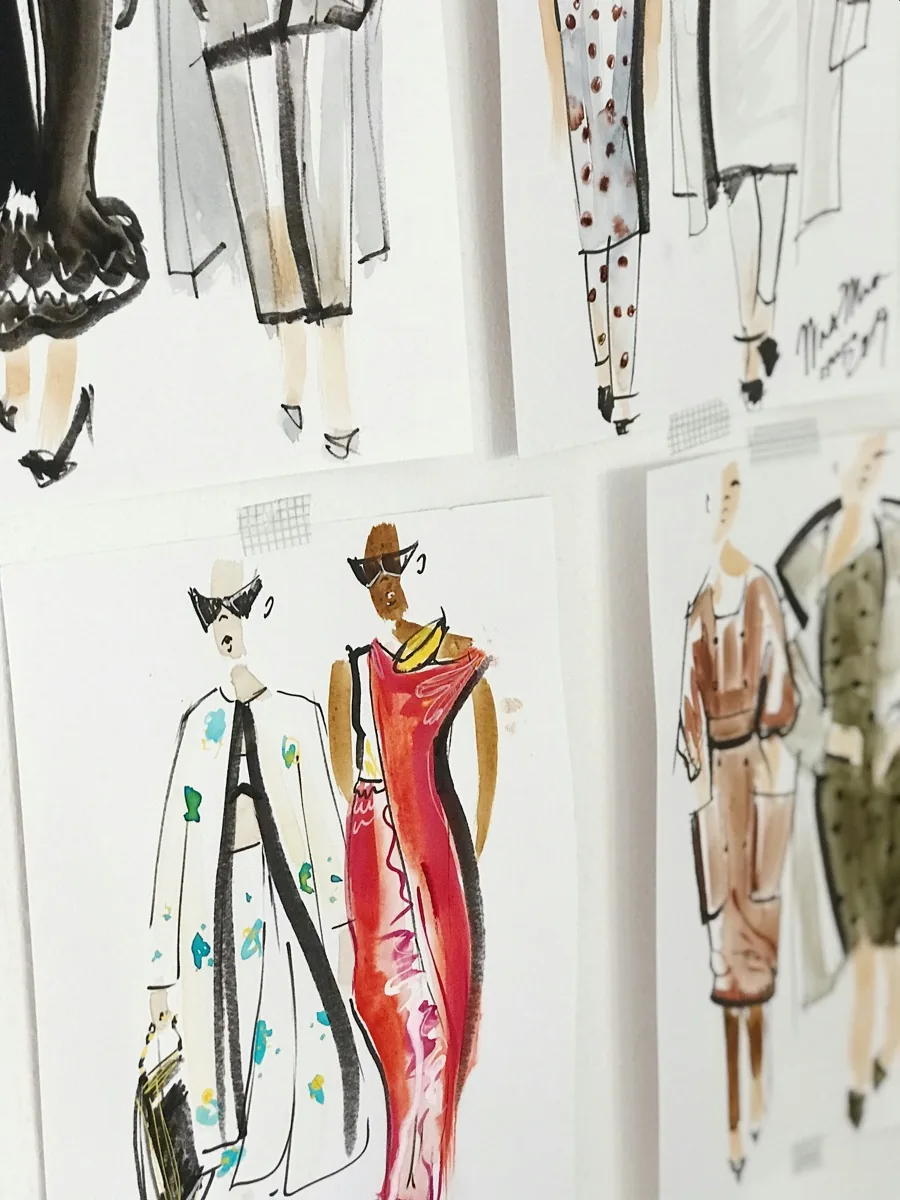
قصّة فستان مكشوف الكتفين مع فتحة الساق من أعلى القصّات طلباً في فساتين السهرة — في بيانات الطلب الحقيقية يتصدّر مكشوف الكتفين قائمة القصّات، وتأتي فتحة الساق بعده مباشرة. لكنهما أيضاً من أصعب القصّات قياساً: خط الكتف المكشوف وارتفاع فتحة الساق نقطتان لا تسامحان الخطأ، وسنتيمتر واحد فيهما يحوّل الأناقة إلى مشكلة. لهذا تفشل عينات كثيرة لا بسبب القماش بل بسبب قياس قصّة لم يُوثَّق بدقّة.
في هذا الدليل نحوّل قصّة مكشوف الكتفين وفتحة الساق إلى نقاط قياس POM واضحة في التيك باك الصناعي، لتخرج العينة كما صُمِّمت من المحاولة الأولى.
لماذا قصّة مكشوف الكتفين صعبة القياس؟
الكتف المكشوف يعتمد على نقطة دقيقة: أين يستقر خط القماش على الذراع والصدر. ارتفاعه أو انخفاضه بمليمترات يغيّر سقوط الفستان كاملاً، وقد يجعله ينزلق أو يضغط. المصنع يحتاج قياساً صريحاً لخط الكتف، نوع الحياكة المثبّتة (مطّاط مخفي؟ عظم تثبيت؟)، ومدى التمدّد المسموح — لا مجرد كلمة «مكشوف الكتفين» في الوصف.
فتحة الساق: ملليمترات تفرق بين الأناقة والإفراط
ارتفاع فتحة الساق قرار حساس: عالٍ جداً يفقد الفستان وقاره، ومنخفض جداً يفقده الحركة والجاذبية. التيك باك يحدّد نقطة بداية الفتحة بقياس دقيق من الخصر أو من الأرض، وطريقة تشطيب حافتها (مكفوفة؟ مبطّنة؟) حتى لا تتفتّل مع الحركة.
هنا يدخل دور نيسكا. بدل أن تترك قصّة حسّاسة كهذه لاجتهاد المصنع، يولّد نيسكا تيك باكاً صناعياً يحدّد نقاط قياس مكشوف الكتفين وفتحة الساق بدقّة ضمن جدول POM جاهز للمصنع. ترفع رسمتك، وتحصل على ملف لا يترك مجالاً للتأويل. ابدأ مجاناً.
نقاط POM التي لا يجب أن تغيب
- خط الكتف المكشوف: ارتفاعه، محيطه، ونوع التثبيت المانع للانزلاق.
- ارتفاع فتحة الساق: من نقطة مرجعية ثابتة، مع تشطيب الحافة.
- محيط الصدر والخصر: أساس استقرار القصّة المكشوفة.
- درجة المرونة (للبودي كون): إن كانت القصّة ملتصقة بالجسم، تُوثَّق نسبة تمدّد القماش.
هذه القصّات الحسّاسة هي بالضبط ما يبحثه مقالنا ٧ أخطاء POM تفشّل العينة — اقرأه لتفهم جذر فشل العينات.
صدر V والقصّات المكمّلة
كثيراً ما تُدمج قصّة مكشوف الكتفين مع صدر V أو مع قصّة بودي كون ملتصقة، فتتضاعف الحساسية: كل قصّة تضيف نقطة قياس جديدة، وتفاعلها معاً يحدّد التوازن النهائي. صدر V مثلاً يحتاج توثيق عمق الفتحة وزاويتها بدقّة، لأن سنتيمتراً واحداً يغيّر طابع القطعة من راقٍ إلى جريء. حين تُوثَّق هذه القصّات معاً في تيك باك واحد، يفهم المصنع تفاعلها ولا يعالج كل قصّة بمعزل عن الأخرى.
دور نيسكا
الأناقة العالية تحتاج قياساً عالي الدقّة. نيسكا تحوّل رسمتك إلى تيك باك صناعي يضبط أصعب القصّات طلباً — مكشوف الكتفين وفتحة الساق وصدر V — في نقاط قياس واضحة، ثم يربطك بالمصانع داخل المنصّة. تصمّم الجرأة، ونحن نضمن أن تخرج صحيحة. ابدأ مجاناً.
The off-shoulder dress with a high slit is among the most-requested cuts in evening wear — in real demand data, off-shoulder leads the cuts, with the slit right behind it. But both are also the hardest to measure: the bare shoulder line and slit height are points that don't forgive error, and a single centimeter turns elegance into a problem. That's why many samples fail — not because of fabric, but because a cut wasn't documented precisely.
This guide turns the off-shoulder and high-slit cuts into clear POM measurements in the industrial tech-pack, so the sample comes out as designed on the first try.
Why the off-shoulder cut is hard to measure
The bare shoulder depends on a precise point: where the fabric line sits on the arm and chest. Raising or lowering it by millimeters changes the entire drape and can make it slip or pinch. The factory needs an explicit shoulder-line measurement, the type of fixing (hidden elastic? boning?), and the allowed stretch — not just the word "off-shoulder" in the description.
The slit: millimeters between elegant and excessive
Slit height is a sensitive decision: too high loses dignity, too low loses movement and appeal. The tech-pack defines the slit start point with a precise measurement from the waist or floor, and the edge finish (bound? lined?) so it doesn't twist with movement.
This is where NEXA comes in. Instead of leaving a sensitive cut to the factory's guess, NEXA generates an industrial tech-pack that pins the off-shoulder and slit measurements precisely in a factory-ready POM table. Upload your sketch, get a file that leaves no room for interpretation. Start free.
POM points that must not be missing
- Off-shoulder line: its height, circumference, and anti-slip fixing.
- Slit height: from a fixed reference point, with edge finish.
- Bust & waist circumference: the foundation that keeps a bare cut stable.
- Stretch ratio (for bodycon): if body-hugging, document the fabric stretch.
These sensitive cuts are exactly what our 7 POM mistakes that fail your sample examines — read it to understand the root of sample failure.
V-neck and complementary cuts
The off-shoulder cut is often combined with a V-neck or a hugging bodycon cut, doubling the sensitivity: each cut adds a new measurement point, and their interaction sets the final balance. A V-neck, for example, needs its depth and angle documented precisely, because one centimeter shifts the piece from refined to bold. When these cuts are documented together in one tech-pack, the factory understands their interaction and doesn't treat each cut in isolation.
Where NEXA fits
High drama needs high-precision measurement. NEXA turns your sketch into an industrial tech-pack that pins the most-requested difficult cuts — off-shoulder, slit, and V-neck — in clear measurements, then connects you to manufacturers on the platform. You design the boldness; we make sure it comes out right. Start free.
— With regards, the NEXA team