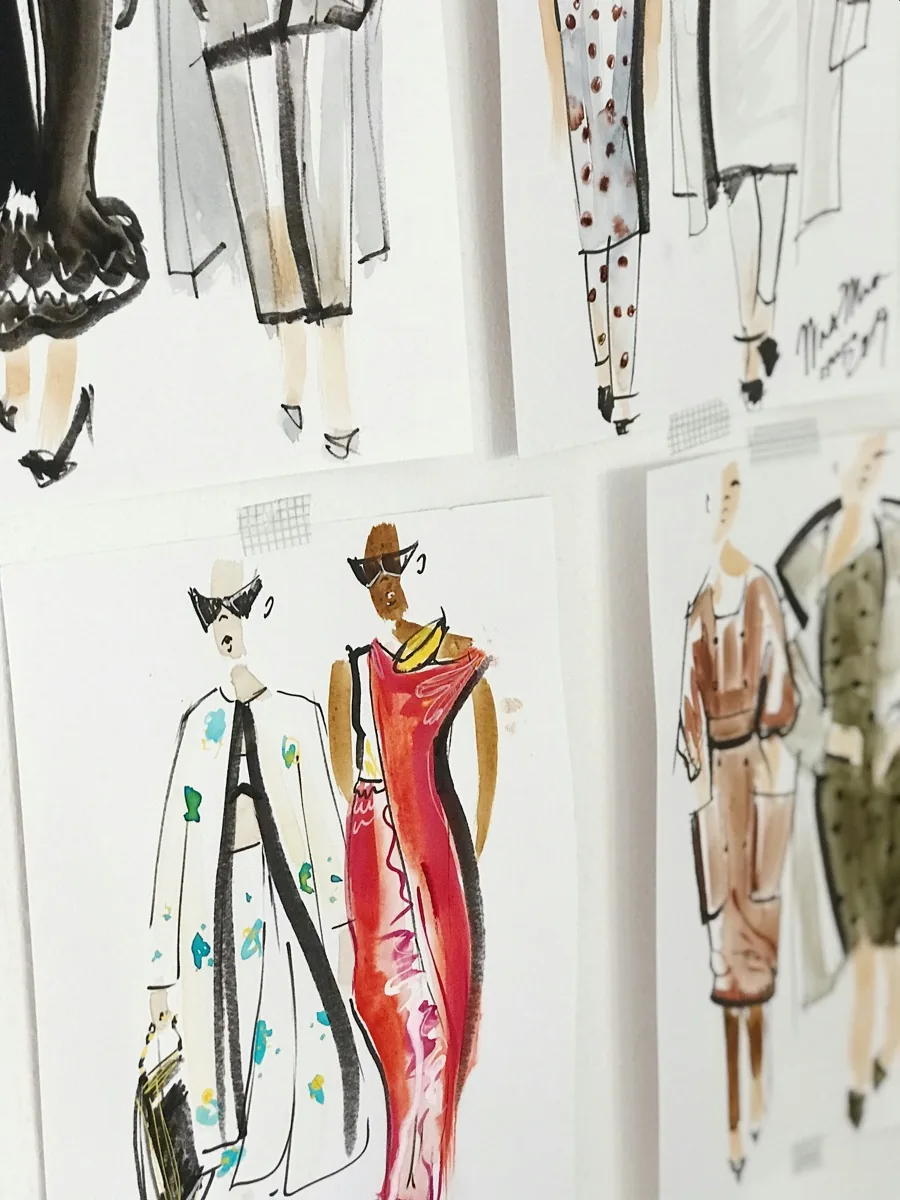
تتنوّع أنماط العبايات السعودية بين عباية البِشت وعباية الفراشة وعباية الكيمونو وعباية الكلوش — ولكل نمط منها قصّة وقياس وطريقة تصنيع مختلفة تماماً. ما ينجح في توثيق عباية كلوش بسيطة لا يكفي إطلاقاً لعباية فراشة بأكمام واسعة، والخطأ الأشهر هو معاملة كل العبايات بنفس جدول القياس. لذلك يبدأ تصنيع أي نمط عباية سعودية من فهم فروقه التقنية وتوثيقها بدقّة في التيك باك قبل الوصول للمصنع.
في هذا الدليل نشرح الفروق التقنية بين أبرز أنماط العبايات السعودية، وكيف يُوثَّق كل نمط في التيك باك الصناعي — مع المصطلح الصحيح لقياس كم الفراشة.
عباية البِشت: الوقار المنسدل
عباية البِشت مستوحاة من البِشت التقليدي بقصّتها المنسدلة الواسعة وأكمامها الفضفاضة، وغالباً بحاشية أو شريط مميّز عند الفتحة الأمامية. التيك باك يوثّق عرض الانسدال، عرض الكم، وموضع الشريط/الحاشية — لأن التوازن بين السعة والوقار هو جوهر هذا النمط.
عباية الفراشة: السعة والقياس الصحيح للكم
عباية الفراشة تتميّز بأكمامها الواسعة جداً المتّصلة بجسم العباية لتعطي شكل جناح الفراشة عند فتح الذراعين. وهنا أهم نقطة تقنية تُغفَل: كم الفراشة يُقاس من الرقبة إلى طرف الكم (الكفّة)، لا من الكتف فقط — لأن الكم والجسم قطعة واحدة متّصلة، فالقياس من الكتف يعطي طولاً خاطئاً يفسد شكل الجناح كاملاً. التيك باك يحدّد هذا القياس صراحةً من الرقبة للكفّة، مع عرض اتساع الكم وزاوية اتصاله بالجسم.
هنا يدخل دور نيسكا. كل نمط عباية يحتاج جدول قياس مختلفاً، والخلط بينها يفسد القصّة. يولّد نيسكا تيك باكاً صناعياً يوثّق نمط عبايتك بقياساته الصحيحة — بما فيها قياس كم الفراشة من الرقبة للكفّة — جاهزاً للمصنع. ترفع رسمتك ويخرج النمط صحيحاً. ابدأ مجاناً.
عباية الكيمونو وعباية الكلوش
- عباية الكيمونو: أكمام واسعة مستقيمة مستوحاة من الكيمونو الياباني، قصّتها مستقيمة عملية — يوثّق التيك باك عرض الكم المستقيم وطول الجسم المنسدل.
- عباية الكلوش: تتّسع تدريجياً من الأعلى للأسفل لتعطي حركة وانسياباً — يوثّق التيك باك زاوية اتساع الكلوش وطوله، تماماً كما في القصّات المتّسعة في فساتين السهرة.
ياقة الشال: التفصيل المشترك المميّز
كثير من أنماط العبايات تُكمَّل بـياقة الشال المنسدلة حول العنق، وهي تفصيل يحتاج توثيقاً خاصاً: عرض الياقة، طول انسدالها، وطريقة تثبيتها على خط الرقبة. ياقة شال غير محسوبة القياس تفقد انسيابها وتبدو ثقيلة.
وإن كانت عبايتك موسمية للتخرّج، فمقالنا عباية التخرج: دليل التيك باك يكمّل هذا الدليل بزاوية الموسم.
دور نيسكا
لكل نمط عباية سعودية لغته التقنية، والخلط بينها أشهر أسباب فشل العينة. نيسكا تحوّل رسمتك إلى تيك باك صناعي يوثّق نمط عبايتك بقياساته الصحيحة — بِشت، فراشة (من الرقبة للكفّة)، كيمونو، كلوش، ياقة شال — ثم يربطك بالمصانع داخل المنصّة. ابدأ مجاناً.
Saudi abaya styles vary between the bisht abaya, the farasha (butterfly) abaya, the kimono abaya, and the A-line abaya — and each style has a completely different cut, measurement, and manufacturing method. What works for documenting a simple A-line abaya is nowhere near enough for a wide-sleeved farasha abaya, and the most common mistake is treating all abayas with the same measurement table. So manufacturing any Saudi abaya style starts from understanding its technical differences and documenting them precisely in the tech-pack before reaching the factory.
This guide explains the technical differences between the main Saudi abaya styles and how each is documented in the industrial tech-pack — including the correct way to measure the farasha sleeve.
The bisht abaya: flowing dignity
The bisht abaya is inspired by the traditional bisht with its wide, flowing cut and loose sleeves, often with a distinctive trim along the front opening. The tech-pack documents drape width, sleeve width, and trim placement — because the balance between fullness and dignity is the essence of this style.
The farasha abaya: fullness and the correct sleeve measurement
The farasha (butterfly) abaya is defined by very wide sleeves connected to the abaya body, forming a butterfly-wing shape when the arms open. Here is the most overlooked technical point: the farasha sleeve is measured from the neck to the cuff end, not from the shoulder alone — because the sleeve and body are one connected piece, so measuring from the shoulder gives a wrong length that ruins the entire wing shape. The tech-pack specifies this measurement explicitly from neck to cuff, with sleeve width and its connection angle to the body.
This is where NEXA comes in. Each abaya style needs a different measurement table, and mixing them ruins the cut. NEXA generates an industrial tech-pack that documents your abaya style with its correct measurements — including the farasha sleeve measured neck-to-cuff — factory-ready. Upload your sketch and the style comes out right. Start free.
The kimono abaya and the A-line abaya
- Kimono abaya: wide straight sleeves inspired by the Japanese kimono, with a practical straight cut — the tech-pack documents straight sleeve width and the flowing body length.
- A-line abaya: widens gradually top to bottom for movement and flow — the tech-pack documents flare angle and length, just like the flared cuts in evening dresses.
The shawl collar: the distinctive shared detail
Many abaya styles are finished with a shawl collar draping around the neck, a detail that needs special documentation: collar width, drape length, and how it's fixed to the neckline. A shawl collar without calculated measurement loses its flow and looks heavy.
And if your abaya is seasonal for graduation, our graduation abaya tech-pack guide complements this with the seasonal angle.
Where NEXA fits
Each Saudi abaya style has its own technical language, and mixing them is a top cause of sample failure. NEXA turns your sketch into an industrial tech-pack that documents your abaya style with its correct measurements — bisht, farasha (neck-to-cuff), kimono, A-line, shawl collar — then connects you to manufacturers on the platform. Start free.
— With regards, the NEXA team